Perimenopause is the transitional phase leading up to menopause, often beginning years before menstrual cycles fully stop. For many women, this stage brings physical, emotional, and cognitive changes that can feel confusing or overwhelming; especially when symptoms appear suddenly or fluctuate month to month.
Understanding what’s happening in the body during perimenopause can help normalize the experience and guide supportive care options.
What Is Perimenopause?
Perimenopause refers to the time when the ovaries gradually begin to produce less estrogen and progesterone, leading to hormonal variability rather than a smooth decline. This phase ends when menopause is reached, defined as 12 consecutive months without a menstrual period.¹
Typical Age Range
-
Can begin as early as the mid-30s
-
Most commonly starts between ages 40–45
-
Average duration: 4–10 years, though this varies widely¹
Stages of Perimenopause
While not formally categorized in conventional medicine, clinicians often describe perimenopause in phases:
Early Perimenopause
-
Cycles may still be regular
-
Symptoms are often subtle and cyclical
-
Progesterone production begins to decline due to less consistent ovulation²
Late Perimenopause
-
Cycles become irregular or skipped
-
Estrogen levels fluctuate dramatically
-
Symptoms tend to intensify and become less predictable¹
What’s Happening with Hormones?
Estrogen
Estrogen does not steadily decline during perimenopause — instead, it fluctuates unpredictably. These rapid rises and drops affect thermoregulation, mood, sleep, and cognition.³
Progesterone
Progesterone often declines earlier than estrogen because ovulation becomes less consistent. Lower progesterone contributes to:
-
Anxiety
-
Sleep disturbances
-
Heavier or irregular bleeding²
TSH and Thyroid Function
Hormonal shifts during perimenopause can influence thyroid hormone binding and metabolism. Symptoms of perimenopause and thyroid dysfunction often overlap — including fatigue, brain fog, and temperature sensitivity — making evaluation important when symptoms are persistent.⁴
Common Perimenopausal Symptoms
Symptoms can vary widely and may include:
-
Hot flashes and night sweats
-
Sleep disruption or insomnia
-
Fatigue and brain fog
-
Anxiety, irritability, or low mood
-
Changes in menstrual flow or cycle length
-
Weight changes and altered metabolism¹³
Importantly, symptoms often come and go, reflecting ongoing hormonal variability rather than permanent change.
The Role of Stress in Perimenopause
Stress plays a significant role during the menopause transition. The hypothalamic-pituitary-adrenal (HPA) axis interacts closely with reproductive hormones. Chronic stress can:
-
Exacerbate vasomotor symptoms
-
Worsen sleep and mood disturbances
-
Increase cortisol, further disrupting estrogen balance⁵
As ovarian hormone production fluctuates, the body becomes more sensitive to stress, making nervous system regulation a key component of symptom management.
How Acupuncture Can Help During Perimenopause
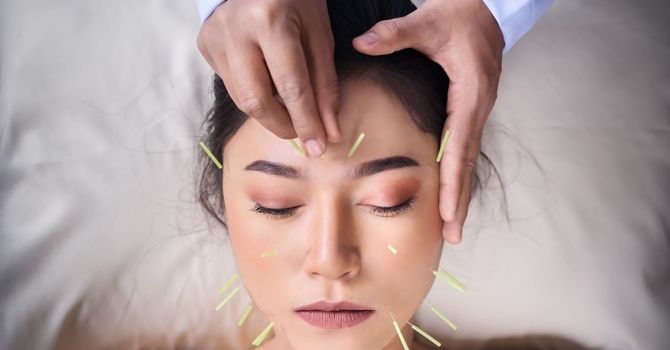
Acupuncture is increasingly used as a complementary therapy during perimenopause, particularly for women seeking non-pharmacologic options or integrative care.
Vasomotor Symptoms
Clinical trials show acupuncture may reduce the frequency and severity of hot flashes and night sweats, particularly compared with no treatment. In the Acupuncture in Menopause (AIM) study, women receiving individualized acupuncture experienced significant improvements in vasomotor symptoms and quality of life.⁶
Meta-analyses of randomized controlled trials have also demonstrated reductions in hot flash scores and overall menopause symptom burden.⁷
Sleep and Fatigue
Systematic reviews suggest acupuncture can improve sleep quality and reduce insomnia severity in perimenopausal women, potentially by regulating autonomic nervous system activity.⁸⁹
Mood and Cognitive Symptoms
Studies indicate acupuncture may support improvements in anxiety, memory symptoms, and emotional well-being, with benefits often persisting after treatment ends.⁶
Proposed Mechanisms
Research suggests acupuncture may:
-
Modulate neurotransmitters such as serotonin and endorphins
-
Support hypothalamic regulation of temperature and stress response
-
Improve parasympathetic nervous system activity⁷⁸
Chinese Medicine Perspective: “The Second Spring”
In Chinese medicine, menopause is traditionally viewed not as decline, but as a natural transition into wisdom and renewal, often referred to as “the Second Spring.”
Perimenopause is seen as a time when the body requires:
-
Nourishment
-
Rest
-
Stress regulation
-
Gentle support of Kidney, Liver, and Spleen systems
Symptoms are understood as signals of imbalance — not failure — and treatment is individualized to each woman’s presentation.
Supporting Perimenopause Holistically
In addition to acupuncture, supportive strategies may include:
-
Prioritizing consistent sleep routines
-
Managing stress and nervous system load
-
Eating balanced, nutrient-dense meals
-
Gentle movement over excessive intensity
-
Allowing space for rest and recovery
Small, consistent changes can significantly improve resilience during this transition.
Final Thoughts
Perimenopause is a complex, dynamic phase; not a single moment or diagnosis. With informed care, individualized support, and attention to both physiology and lifestyle, many women find meaningful relief and improved quality of life.
Navigating perimenopause and looking for supportive care?
Acupuncture can be a gentle, evidence-informed option to help regulate symptoms and support balance.
Main Line Women’s Acupuncture
141 West Wayne Ave, Wayne, PA
Women’s health • Hormones • Menopause support
https://mainlinewomensacupuncture.janeapp.com/
Call or text: 484.222.0854
Citations:
-
Harlow SD, Gass M, Hall JE, et al. Executive summary of the Stages of Reproductive Aging Workshop +10. Menopause. 2012;19(4):387-395.
-
Prior JC. Progesterone for symptomatic perimenopause treatment. Climacteric. 2018;21(4):358-365.
-
Santoro N, Randolph JF Jr. Reproductive hormones and the menopause transition. Obstet Gynecol Clin North Am. 2011;38(3):455-466.
-
Pearce EN. Thyroid disorders in perimenopause. Endocrinol Metab Clin North Am. 2019;48(3):533-545.
-
Gordon JL, Girdler SS. Hormone replacement therapy in the menopause transition. Psychoneuroendocrinology. 2014;47:86-97.
-
Avis NE, Coeytaux RR, Isom S, et al. Acupuncture in Menopause (AIM) study. Menopause. 2016;23(6):626-637.
-
Chiu HY, Pan CH, Shyu YK, Han BC, Tsai PS. Effects of acupuncture on menopause-related symptoms. Menopause. 2015;22(3):361-369.
-
Qin Z, et al. Acupuncture for perimenopausal insomnia: systematic review and meta-analysis. Complement Ther Med. 2023.
-
Cao H, et al. Acupuncture for insomnia: meta-analysis. Sleep Med Rev. 2019;48:101-212.
Amara McLees
Contact Me