For years, millions of women have lived with a diagnosis that never fully explained what they were experiencing.
Irregular periods. Infertility. Acne. Weight fluctuations. Hair loss. Anxiety. Insulin resistance. Fatigue. Inflammation. Misunderstood symptoms that often extended far beyond the ovaries.
Now, after years of advocacy, research, and patient input, the condition historically known as Polycystic Ovary Syndrome (PCOS) is being renamed Polyendocrine Metabolic Ovarian Syndrome (PMOS) — a shift many experts believe is long overdue.
And for many women, this is more than just a name change. It is validation.
Why Experts Are Changing the Name
The term “polycystic ovary syndrome” has been criticized for decades because it does not accurately describe the condition.
Despite the name:
- many women diagnosed with PCOS do not actually have ovarian cysts
- the “cysts” seen on ultrasound are typically immature follicles, not true cysts
- the condition affects far more than reproductive health alone
The newly proposed name — Polyendocrine Metabolic Ovarian Syndrome (PMOS) — reflects what researchers and clinicians have increasingly understood:
this is a complex endocrine and metabolic disorder that impacts the entire body.
The international consensus behind the change involved:
- researchers
- physicians
- endocrine societies
- patient advocacy groups
- thousands of women living with the condition across the world.
PMOS Is About More Than Fertility
Historically, many women were only taken seriously when they were trying to conceive.
But PMOS can affect:
- metabolism
- cardiovascular health
- insulin sensitivity
- mental health
- inflammation
- sleep
- skin
- weight regulation
- long-term hormonal balance.
Symptoms may include:
- irregular or absent cycles
- infertility or ovulatory dysfunction
- acne
- hair thinning or excess hair growth
- fatigue
- weight changes
- anxiety or depression
- insulin resistance
- difficulty regulating blood sugar
- chronic inflammation.
Research estimates that PMOS affects approximately 1 in 8 women worldwide, yet up to 70% remain undiagnosed.
That delay in diagnosis can leave women feeling dismissed, frustrated, and disconnected from their own bodies.
Why This Change Matters for Diagnosis
Language shapes medicine.
For years, the name PCOS unintentionally minimized the condition and narrowed clinical focus primarily toward fertility or ovarian imaging. Many women whose symptoms did not “fit the stereotype” were overlooked or diagnosed late.
Experts hope the PMOS terminology will help:
- improve earlier diagnosis
- encourage more comprehensive metabolic screening
- increase awareness among providers
- reduce stigma and misunderstanding
- promote more individualized treatment approaches.
Importantly, the new terminology acknowledges that this condition is not simply “an ovarian issue.” It is a whole-body endocrine and metabolic condition that deserves deeper clinical attention.
A More Compassionate Understanding of Women’s Health
For many women, this shift feels deeply personal.
Many patients with PMOS have spent years hearing:
- “your labs are normal”
- “just lose weight”
- “you’re too young to worry”
- “you can go on birth control”
- “it’s probably stress.”
The name change represents a broader movement in medicine toward listening more carefully to women’s lived experiences and recognizing the complexity of hormonal health.
It also opens the door for more integrative conversations around:
- inflammation
- nervous system regulation
- metabolic health
- nutrition
- stress physiology
- sleep
- fertility
- mental and emotional wellbeing.
What Does the Research Say About Acupuncture and PMOS?
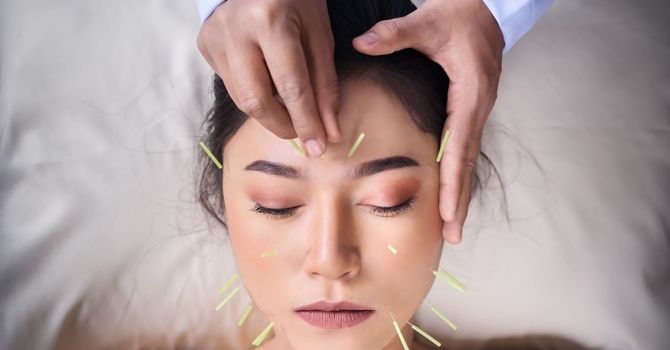
As integrative medicine continues to grow, acupuncture has become an area of increasing research interest for women with PCOS/PMOS.
Current evidence suggests acupuncture may help support:
- menstrual regulation
- ovulation frequency
- insulin sensitivity
- hormone balance
- stress regulation
- quality of life.
Several systematic reviews and randomized trials have shown promising outcomes in women with PCOS, including:
- improved ovulation rates
- improved menstrual frequency
- reductions in testosterone levels
- improvements in insulin resistance markers such as HOMA-IR.
Research has also explored acupuncture’s effects on the nervous system and insulin signaling pathways. Some studies suggest electroacupuncture may help regulate sympathetic nervous system activity and improve glucose metabolism in women with PCOS.
A 2025 review reported that acupuncture treatment may improve ovulation and pregnancy rates while also helping regulate endometrial receptivity and androgen levels.
At the same time, it is important to acknowledge that the research is still evolving. Some larger randomized trials found acupuncture was not superior to standard medical treatment for all outcomes, particularly live birth rates.
This is an important part of evidence-based care:
acupuncture is not a “magic cure,” but it may serve as a supportive integrative therapy alongside conventional medical treatment for many women navigating PMOS
An Integrative Approach to PMOS
At Main Line Women’s Acupuncture, we often support women navigating:
- irregular cycles
- fertility challenges
- painful periods
- fatigue
- stress-related hormone disruption
- inflammatory symptoms associated with PMOS.
Acupuncture and integrative medicine are not replacements for conventional care, but research suggests they may help support:
- nervous system regulation
- stress reduction
- cycle regularity
- ovulatory function
- metabolic health
- quality of life in women with PCOS/PMOS.
Most importantly, women deserve care that sees the full picture — not just isolated symptoms.
Final Thoughts
The transition from PCOS to PMOS represents more than a name change.
It reflects a broader shift in women’s healthcare:
toward more accurate diagnosis, more compassionate listening, and a deeper understanding of how interconnected hormonal, metabolic, and emotional health truly are.
For many women who have spent years feeling dismissed, this change sends an important message:
Your symptoms are real.
Your experience matters.
And your health is about far more than your ovaries.
Dr. Amara McLees, DACM, L.Ac. | Main Line Women’s Acupuncture | Wayne, PA | www.mainlinewomensacupuncture.com | Instagram: @mainlinewomensacupuncture
Book your appointment here: https://mainlinewomensacupuncture.janeapp.com/
Sources
- Teede HJ, Misso ML, Boyle JA, et al. Proposal for renaming Polycystic Ovary Syndrome (PCOS) to Polyendocrine Metabolic Ovarian Syndrome (PMOS). The Lancet. 2026. Available at: https://www.thelancet.com/journals/lancet/article/PIIS0140-6736(26)00717-8/fulltext
- Endocrine Society News Room. PCOS Name Change Initiative. 2026. Available at: https://www.endocrine.org/news-and-advocacy/news-room/2026/pcos-name-change
- World Health Organization. Polycystic Ovary Syndrome (PCOS) Fact Sheet. Available at: https://www.who.int/news-room/fact-sheets/detail/polycystic-ovary-syndrome
- Mayo Clinic. Polycystic Ovary Syndrome (PCOS): Symptoms and Causes. Available at: https://www.mayoclinic.org/diseases-conditions/pcos/symptoms-causes/syc-20353439
- Johansson J, et al. Acupuncture for Polycystic Ovary Syndrome: A Randomized Controlled Trial. BMJ Open. 2015;5. Available at: https://bmjopen.bmj.com/content/5/4/e007757
- Lim CED, Wong WS, et al. Acupuncture for Polycystic Ovarian Syndrome. Cochrane Database of Systematic Reviews. Available through PubMed and Cochrane Library.
- Yu Ng EH, et al. The Role of Acupuncture in Polycystic Ovary Syndrome Treatment. Human Reproduction Update. Available at: https://academic.oup.com/humrep
- Frontiers in Endocrinology. Acupuncture and PCOS/PMOS Research Review. 2024. Available at: https://www.frontiersin.org/journals/endocrinology/articles/10.3389/fendo.2024.1509152/full
- Medicine (Baltimore). Acupuncture for Polycystic Ovarian Syndrome: A Systematic Review and Meta-analysis. 2017. Available at: https://journals.lww.com/md-journal/fulltext/2017/06090/acupuncture_for_polycystic_ovarian_syndrome__a.18.aspx
- Evidence-Based Complementary and Alternative Medicine. Acupuncture and Insulin Resistance in PCOS. Available at: https://pmc.ncbi.nlm.nih.gov/articles/PMC3773899/
Amara McLees
Contact Me